

4th Sunday In Ordinary Time Year B ~ Mark 1:21-28
In the Gospel of Mark, Jesus’ function as a teacher is often emphasized, but that same evangelist seldom recounts the content of the Lord’s teaching. One manifestation of His teaching power, though, is the casting out of demons. While in this weekend’s Gospel, an account of an exorcism follows what Jesus taught in the synagogue of Capernaum, yet the response of the people who witnessed it was primarily related to Jesus’ teaching, though closely associated with the exorcism. Twice, those who heard what Jesus said that day were described as astonished (Gk. ἐξεπλήσσοντο) and, after the exorcism, they were amazed (Gk. ἐθαμβήθησαν = dumbfounded to the point of being emotionally stalled). The reason for their amazement would appear to be because of the authority or exousia (Gk. ἐξουσία) they witnessed in Jesus and not as much as it was in regard to the content of what He said.
The Lord’s divine authority can be understood in two ways. The first is the contrast between how Jesus taught and how the other authoritative teachers of the Mosaic Law instructed the people. Those scribes taught as being totally dependent upon the Torah or the first five books of the Hebrew Bible, whereas Jesus spoke as a commissioned prophet who heralded the coming of the Kingdom of God. Thus, Jesus did not depend solely upon biblical citations, because He was perceived as an eschatological prophet or a kerruso (Gk. κηρύσσω) who heralds the Divine Truth as a duly-appointed divine crier. Much more than that, as will become clearer later on – Jesus is the anointed Messianic Son of God or as the demon announces, He is “the Holy One of God.” In other words, the authority Jesus possessed was immediate and authoritative in its character, whereas the scribes only had mediate authority, based upon the Torah.
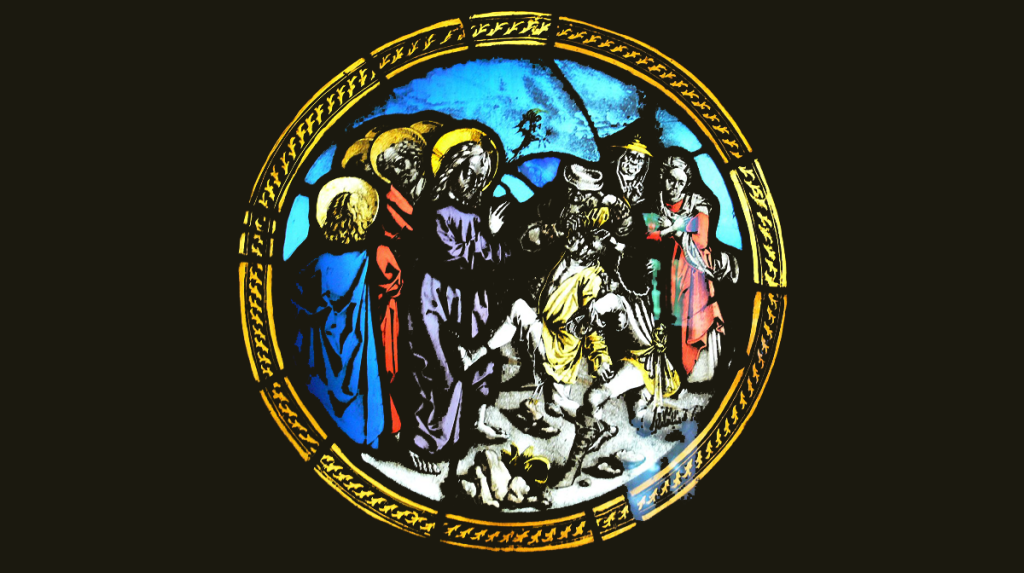
The second perception in regard to Jesus’ authority is manifested in the dominion He has over demons. In that regard, authority is not based on content, the manner in which He taught, nor the source of His own authority but in the power He had to cast out demons – the visible demonstration of His authority. Though a healing action, what happened in the synagogue is more than that because it is an assertion of the Lord’s dominion over evil and satanic power being curtailed. In two short, powerful statements – Quiet! Come out of him!—Jesus casts out the demon. This incident, in both word and exorcism, proclaims the dawn of the Kingdom of God. Hence, the authority that Jesus innately possesses comes from the proclamation of the Kingdom. This miraculous freeing of an unnamed man from the unclean spirit reveals Jesus as the end-time prophet who heralds the coming of the Kingdom and that, through Him, the Reign of God comes into people’s lives, as happened with the possessed man.
Jesus came to end the reign of the demonic (“unclean spirits”) in the world. The demon recognizes this but that evil one also appears startled by the fact that the time had already come (Mark 1:14–“the time of fulfillment”), because it is not yet time, yet the demon has been mistaken. Nonetheless, Jesus’ presence tells that a different time has come. The time of fulfillment is now. The new age has begun in the power and authority that Jesus exercises over demons and soon-to-be vanquished forces of evil.
Excerpted from John Mark Hicks. September 12, 2011. johnmarkhicks.com
 Nature and dignity