
14th Sunday in Ordinary Time
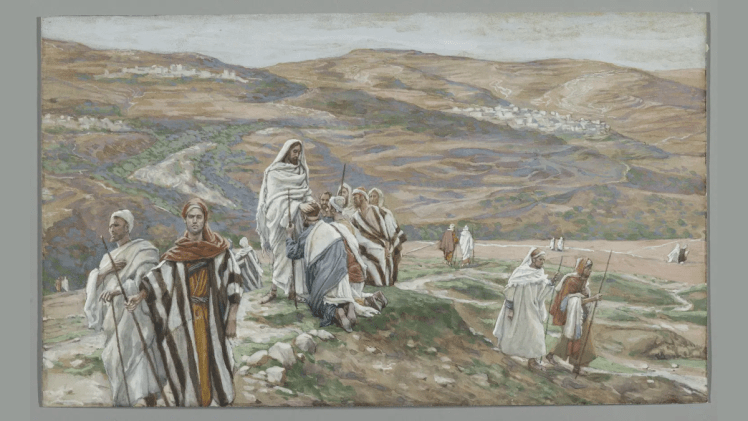

Mission of the Seventy-two Disciples
The first encyclical of the pontificate of the late Holy Father was also the first to be written by two Popes. It was begun by Pope Benedict XVI and completed by Pope Francis. The encyclical completes the trilogy of theological virtues that Pope Benedict had previously written in regard to charity (Deus caritas est) and hope (Spe Salvi). In light of this week’s Gospel, article thirty-seven of that encyclical warrants re-reading.
Jesus sent the 72 out with a message, which had two elements to it: “Peace” and “The kingdom of God is at hand!” The two are allied. The “peace” they were to announce was precisely the peace that Jesus had been preaching — peace with God through the forgiveness of the sins by which human beings cut themselves off from God. The way to enter into that peace is to enter into God’s kingdom, to allow the Lord to be the king of one’s thoughts and actions. So they were supposed to be heralds of the joy that comes from peace and reconciliation with God, which has an enormous potential to attract others who are so obviously not at peace with God and others.
Second, Jesus sent them out with a certain “packaging” for that message as well. They were sent out as “lambs in the midst of wolves,” not wolves in the midst of lambs. They were sent to propose the Gospel in a compelling way to others’ freedom, not to impose anything. They were to proclaim the Gospel with confidence, but with meekness. They were not called to proclaim it with force of weapons or the power of threats, but with the persuasive power of their faith, goodness and holiness.
That was why Jesus instructed them to go out with no purse, no bag, no sandals. How could they possibly proclaim effectively that the kingdom of GOD is at hand if they were trying to increase the size of their purse and build an earthly kingdom of their own — or if others even suspected them of doing so? How could they proclaim a trust in God’s providence if they didn’t live by that trust and seemed rather to rely on mammon? Jesus carried no purse, bag and sandals in his proclamation of the Gospel to the poor, and he called us to follow him. Jesus went on to tell them that if they were welcomed by a household, they were to stay there, lest they ever start to look for a “better deal.”
They were sent out two-by-two — even though they could have covered twice as much ground if they had been sent out individually — in order to show through their interaction with each other the love and forgiveness that is at the heart of the Gospel. Even the way Jesus prepared them to handle rejection — by wiping the dust off their feet as a witness of their rejection rather that carry the pain of their rejection with them to another town — shows that they were to carry only Jesus’ message rather than one of resentment. This was all part of the packaging to reinforce the proclamation of the peace of the kingdom
Lumen fidei, n. 37
“Those who have opened their hearts to God’s love, heard his voice and received his light, cannot keep this gift to themselves. Since faith is hearing and seeing, it is also handed on as word and light … The light of Christ shines, as in a mirror, upon the face of Christians ; as it spreads, it comes down to us, so that we too can share in that vision and reflect that light to others, in the same way that, in the Easter liturgy, the light of the paschal candle lights countless other candles … Faith is passed on, we might say, by contact, from one person to another, just as one candle is lighted from another. Christians, in their poverty, plant a seed so rich that it becomes a great tree, capable of filling the world with its fruit” (LF, n. 37).
Excerpted from http://www.catholicpreaching.com. Fr. Roger Landry. The Mission of the 72 Today, 14th Sunday of Ordinary Time (C). July 7, 2013.
 Nature and dignity