13th Week in Ordinary Time

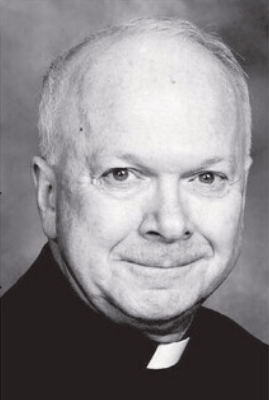
Archbishop John Carroll & Charles Carroll, His Cousin
Charles Carroll of Carrollton (1737-1832) was the only Catholic signer of the Declaration of Independence and the longest surviving of the fifty-six Founding Fathers of the nation. As an only child, Charles was not only the singular heir to the largest fortune in colonial Maryland but to the ancestral legacy and traditions of defending family and the Catholic faith passed on by prior Carroll generations. At the age of ten, he was sent to Maryland’s eastern shore, along with his cousin John Carroll (1735-1815), who would later become the first Catholic Bishop in the United States, to study secretly at the Jesuit school at Bohemia Manor in Cecil County.
Subsequently, both cousins were sent to study at the College of St. Omer in Artois (at that time part of the Spanish Netherlands). Saint-Omer had been chosen as a site conveniently close to England, just 24 miles from Calais, and, then, ruled by Catholic Spain as part of Flanders. The school was a popular destination for the education of boys from wealthy Catholic families from England and Maryland. It had earlier been founded ca.1592/93 by the Jesuits for the education of English Catholics, particularly for those seeking to pursue a religious vocation or to serve the Catholic Church in England. In 1658 Spain formally ceded St Omer and much of the province of Artois to France. With the Jesuits eventually being expelled from France in 1762, the Jesuit masters of St. Omer and many of the students fled to the Austrian Netherlands, which is now part of modern Belgium, moving first to Bruges, and then to Liège, where the college operated under the protection of the Prince-Bishop of Liège from 1773.
John Carroll joined the Society of Jesus as a postulant at age 18 in 1753. Then, in 1755, he began his studies of philosophy and theology at a Jesuit seminary in Liège, Belgium. Six years later, on February 14, 1761, Carroll was ordained to the priesthood and he was formally professed as a Jesuit in 1771. When Pope Clement XIV officially suppressed the Society of Jesus in 1773, Carroll returned to the family plantation in Maryland.
At that time, the establishment of a Catholic parish in Maryland was legally forbidden. However, in 1774, Father Carroll built a small chapel on the family plantation and named it Saint John the Evangelist. In 1776, both Father Carroll and his cousin Charles embarked on a failed mission to the British Province of Canada seeking the French-speaking citizens’ willingness to join the American Revolution. Their delegation aroused the anger of the Bishop of Quebec and, when another delegate, Benjamin Franklin, became ill, Father Carroll accompanied Franklin back from Montreal to Philadelphia.
Though few in number, the Catholic priests in the Thirteen American colonies were under the ecclesiastical jurisdiction of the Apostolic Vicariate of the London District in England. After American independence, anti-British sentiment in the new United States made it important to change that jurisdiction. When Bishop Richard Challoner, the most recent vicar-apostolic, died in 1781, his successor, Bishop James Talbot, refused to exercise jurisdiction in the United States.
The end of the American Revolution marked the loosening of anti-Catholic sentiment and laws in the United States. Beginning on June 27, 1783, Carroll held a series of meetings at White Marsh Manor in Bowie, Maryland. These meetings started the formation of the American Catholic Church. The Maryland priests felt it was too soon to have an American bishop. The papal nuncio in France, Cardinal Giuseppe Doria Pamphili, then asked Benjamin Franklin, who at that point was in Paris as American Minister to the French court, for his advice on the matter. Franklin responded that the separation of church and state did not permit the U.S. government officially to indicate a preference. Privately, Franklin suggested that the Vatican could put a French bishop in charge of the American church, but also expressed his admiration for Carroll’s abilities.
On June 9, 1784, Pope Pius VI appointed Father Carroll as provisional superior of the missions for the United States, with the power to celebrate the sacrament of confirmation. Several months later, the Vatican established the Apostolic Prefecture of the United States with Carroll as prefect apostolic. The next year, writing to Rome, Carroll noted that Maryland had the largest number of observant Catholics, despite having only nineteen priests. He urged Cardinal Leonardo Antonelli to allow the priests to have a voice in appointing the first bishop in order to alleviate fears of Vatican control. By a nearly unanimous vote, the Maryland clergy recommended that Pope Pius IV appoint Fr. Carroll as the first bishop of Baltimore. This act took place on 6 November 1789 and he was consecrated in England by Bishop Charles Walmesley.
Returning to the United States, Carroll was invested as bishop at St. Thomas Manor Church in Charles County, Maryland. When it was established, the Diocese of Baltimore held jurisdiction over what is today the area of the United States east of the Mississippi River. Then, in April 1808, Pope Pius VII elevated the Diocese of Baltimore into the Archdiocese of Baltimore, making it the first archdiocese in the United States. He appointed Bishop Carroll as its first Archbishop. The pope divided the nation into four suffragan dioceses under that newly-erected archdiocese: Boston, New York, Philadelphia, and Bardstown (KY).
Excerpted from en.wikepedia.org. s.v. “John Carroll (archbishop of Baltimore) http://www.charlescarrollhouse.org “Charles Carroll of Carrollton – The Signer.”
 Nature and dignity