
12th Week in Ordinary Time
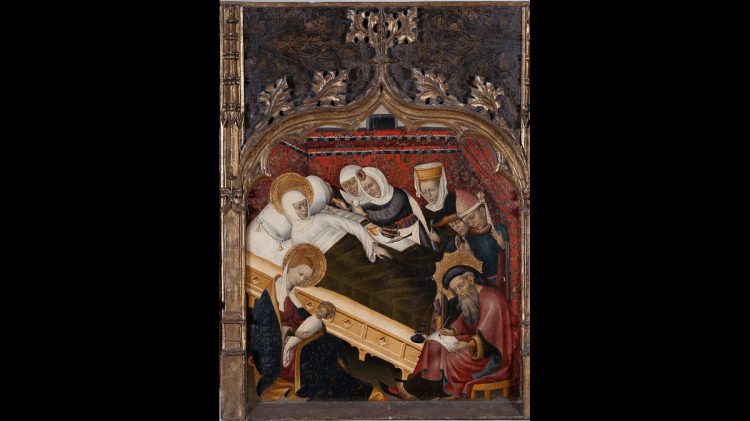

Nativity of John the Baptist
The accounts of the events accompanying the Baptist’s birth, coupled with the declarations that Jesus made about John both testify to why the early Church held the Precursor in such high esteem. The Lord declared John to be “more than a prophet” (Lk 7:26) and “among those born of women, no one is greater than he” (Lk 7:28). And Jesus applied one of the prophecies of Malachi (Mal 3:1) to John: Jesus said, “Behold, I am sending my messenger ahead of you, he will prepare your way before you.”
St. John the Baptist is one of the few saints who has two feast days: one celebrating his birth, June 24, and one remembering his death, August 29. The fact that the Nativity of St. John the Baptist is celebrated only days after the summer solstice (June 20) is no coincidence. Three days after what is traditionally considered the longest day of the year, the sun will gradually begin its annual descent and the days become shorter. Three days after the winter solstice is Christmas Day, when days start to become longer and when we celebrate the birth of Jesus.
Both the Birth of Jesus and the Baptist’s Nativity come on the eighth day before the first of the following month, or dies VIII ante Kalendas. In the Roman calendar, this refers to the eighth day before the first day of the next month, which is also the first day of the month. Using the date of June 17, 2025, and the Roman calendar system “dies VIII ante Kalendas”, that calculation would correspond to the date of June 24th. The timing of those days is also significant because St. John is considered as the lamp, but Christ is the true Light of the World, thus fulfilling St. John’s prophecy, “He must increase, I must decrease.”
The day was also considered one of several “charmed festivals” throughout the year. The designation “charmed festivals” appears in folklore and cultural traditions associated with specific feast days rather than being an official liturgical category recognized by the Church herself. On such days, like the Nativity of John the Baptist, tradition held that hidden treasures were to lie open in unlikely places. Belief was once also prevalent that on St. John’s Day herbs were given unusual healing powers which they would retain if picked that night. People would later bring these herbs to church for a special blessing.
The Gospel recounts the birth, circumcision and naming of the child of Elizabeth and Zechariah. The marvelous circumstances surrounding John’s birth caused great bewilderment and caused “her neighbors and relatives” to ask, “What, then, will this child be?”
 Nature and dignity