
7th Week of Easter
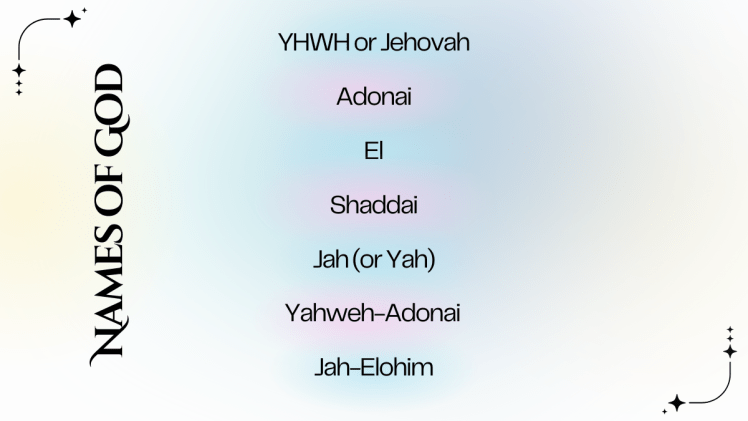

Seven Names for God Used in Psalm 68
Though used three times as the Responsorial Psalm this week, most commentators believe Psalm 68 is connected with the coming of the Ark of the Covenant into Jerusalem (2 Samuel 6) – not only celebrating that event, but also the faithfulness of God to give Israel victory over her enemies, and to make Jerusalem secure enough to bring the ark into the city. In the Septuagint (LXX) and Latin Vulgate numbering of the Psalms this is designated as Psalm 67. The corrupted text of the Hebrew version of this psalm makes it a challenge for commentators, both from the Hebrew text and in its various translations. Scholars often label it as “the most difficult and obscure of all the psalms.” One of its unique features is that the name of God is invoked in seven different forms: YHWH (or Jehovah), Adonai, El, Shaddai, Jah (or Yah), Yahweh-Adonai and Jah-Elohim. Those names highlight different aspects of God’s character and power, such as His sovereignty, majesty, and His relationship with the people. A more detailed analysis of those titles enshrines an aspect of God’s divine nature:
YHWH (or Jehovah): This is the most sacred name of God in the Hebrew Bible, often translated as I AM or He Who Is. It signifies God’s eternal existence and power. The name Yahweh is connected to God as the Becoming One (Exodus 3:13-14), the God who becomes what His people need.
Adonai: This name means Lord or Master and it is often used to show reverence and respect for God. Many modern Jews, due to the perceived holiness of the sacred name YHWH, use Adonai when reading the Torah or in prayers, as a respectful substitute. Some scholars interpret Adonai as a pluralis majestatis or a plural of majesty, indicating God’s supreme and exalted status.
El: This is a general name for God, meaning God or The God. El is a very common term for God in the Hebrew Bible.
Shaddai: This name means Almighty or God of the Mountains and emphasizes God’s power and authority. The meaning of Shaddai is difficult to establish. The authors of the Septuagint use παντοκράτωρ and the Vulgate translated it as omnipotens that in English becomes Almighty.
Yah (Jah): This is a short form of Yahweh and is often used in praise and exaltation. Yah, is probably a contraction of the word Yehovah; at least as the ancient versions understood it. It is used only in a few places in the sacred writings. It might be translated The Self-existent.
YHWH-Adonai: This combines the names Yahweh and Adonai, emphasizing God’s eternal Lordship and power. Psalm 68 speaks much of the ark coming to Jerusalem, but that only happened after David defeated Israel’s surrounding enemies. David thought of how God rescued him in those conflicts. In doing so he used the somewhat uncommon but wonderful phrasing of Yahweh Adonai (GOD the Lord).
Jah-Elohim: This combines Jah and Elohim, highlighting God’s divine power and nature.
These seven names of God, according to Jewish practice, once written down they cannot be erased because of their holiness: The Tetragrammaton or YHWH, Adonai, El, Elohim, Shaddai, Adonai-Tzevaot (Eng. Lord, God of Hosts). Other scholars add the title I Am that I Am (Ex 3:14) to the list. In addition, the name Jah—because it forms part of the Tetragrammaton—is also considered to be similarly protected from erasure, too.
 Nature and dignity