
5th Sunday of Easter
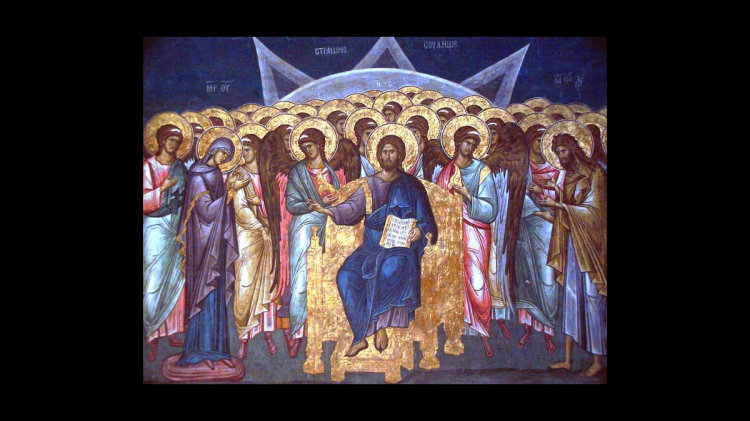

Rev 21:1-5a
According to one biblical scholar, while Jerusalem is the focus of Jewish identity, faith, and hope, in the Book of Revelation, Jerusalem signifies “the election of a new people and the sealing of a new covenant” (Wilfrid J. Harrington, Sacra Pagina: Revelation, p. 209). John the Revelator writes, “Then I saw a new heaven and a new earth” (Rev. 21:1). Those words echo the prophecies of Isaiah (Is 65:17; 66:22) about God creating a future new heaven and a new earth. The Greek word used for what, in English, translated as new is kainos (Gk. καινός), and the Greek expression usually indicates newness in terms of quality, not time. In other words, “new” is meant to be understood as “that which is recent and, as such, superior to that which is old.”
The new creation will be like the resurrection of the dead. In normal circumstances, the body becomes corrupt in death and passes away, but despite that, the newly-resurrected body still has continuity with its old original body. By noting that God will make all things new, the emphasis is placed on a form of re-creation by which the old is transformed into the new. In John’s vision, he also sees a holy city, “a new Jerusalem, coming down out of heaven from God, prepared as a bride adorned for her husband” (Rev 21:2). The central feature of this new reality is found in God’s declaration from the throne, “Behold, God’s dwelling (Gk. σκηνή or tabernacle) is with the human race. He will dwell with them and they will be his people and God himself will always be with them as their God” (Rev 21:3).
The mention of God’s dwelling has profound Old Testament connotations. In the Book of Leviticus, God declares, “I will set my tabernacle [Hebrew, mishkan] in your midst, and will not loathe you. Ever present in your midst, I will be your God, and you will be my people” (Lev 26:11-12). The tabernacle (Heb. mishkan), first mentioned in Exodus (Ex 25:8), was the portable sanctuary that the Israelites carried with them in their wilderness journey. Mishkan comes from the Hebrew root meaning “to dwell” and, so, the tabernacle was considered to be the earthly dwelling place of Yahweh. In Exodus 25:8-9, God instructs Moses to tell the Israelites to build a mikdash or sanctuary where God might dwell, specifying exactly how the tabernacle should be designed. The Greek word skene (Gk. σκηνή) was the ideal translation of the Hebrew word mishkan because in later Jewish usage the verb shakan became associated with the Shekinah or the divine presence of God among His people.
Normally God’s dwelling was associated with the tabernacle or temple but now John declares, “I saw no temple in the city, for its temple is the Lord God almighty and the Lamb” (Rev 21:22). This is a work of God that began in the Incarnation, “And the Word became flesh and made his dwelling [Gk. σκηνόω—literally to dwell or pitch a tent] among us, and we saw his glory, the glory as of the Father’s only Son, full of grace and truth” (Jn 1:14). In the New Testament, skēnóō (Gk. σκηνόω) is to dwell, to pitch a tent, or to encamp understood as in intimate communion with the resurrected Christ – even as Jesus Himself lived in unbroken communion of life and love with the Father during the days when He was in the flesh.
The most fundamental truth about eternity involves both the absence of powers that are opposed to God and diminish life along with the eternal presence of God Himself who gives life. Death or mourning, wailing or pain (Rev 21:4) have passed away and God’s dwelling is now eternally with His people. In firm contrast with worldly Babylon, the new Jerusalem is “prepared as a bride adorned for her husband” (Rev 21:2) who calls all the nations to drink from the water of life and to be healed with the leaves of the tree of life (Rev 22:1-5). God, who is seated on the throne, declares this promise signifying a transformative change: a renewal of all things, encompassing both the physical world and the spiritual realm. The phrase indicates God’s active role in bringing about that transformation. It is not a passive promise but a declaration of God’s power to renew all things. This promise suggests a renewal of the entire creation, a restoration of what has been corrupted or lost. It also implies a newness in the spiritual realm, a fresh beginning for those who believe in God’s promise. The verse is part of a larger vision of a restored and perfected world, where suffering and death are no more. It offers hope and a vision of a future where all things are renewed and made perfect.
Excursus—a discussion different from above
Why do some translations continue to use the word behold and what exactly does this word mean? Behold is taken from the word bihalden which is an Old English word. If we break this word down, it means to thoroughly hold something (bi- ‘thoroughly’ and haldan ‘to hold’). When we look to Strong’s Concordance, in the Old Testament Hebrew, behold is a translation of the word hinneh. When this word is used, it is generally introducing something new or unexpected. This word indicates that we need to pay close attention to what follows it.
In the New Testament Greek, the word hinneh becomes idou (Gk. ἰδού), which holds the original Hebrew meaning but also ties it more to our verb “to see”. So why not just say “Look” or “See”? The simple answer is because those words alone don’t accurately convey the meaning of behold in its entirety. To behold is to do more than just glance or look at something; to behold is to be captivated. When you behold something, you see it with your eyes, but you also hold your gaze on it in order to search and to understand.
If we take what we know from the Hebrew, Greek and the Old English definition, we’d think of the word behold as more of an intense indicator – something more along the lines of “stop, look and listen”, “don’t miss this”, “this is super important”, or “this changes everything”. The word behold is alerting us that we want to pay attention so that we can truly see and thoroughly understand. We want to behold what comes next because it is so important! “Therefore the Lord himself will give you a sign. Behold, the virgin shall conceive and bear a son, and shall call his name Immanuel” (Is 7:14).
Excerpted from http://www.sixthnotesclothing.com. “Meaning of Behold.”
 Nature and dignity