
1st Sunday of Lent
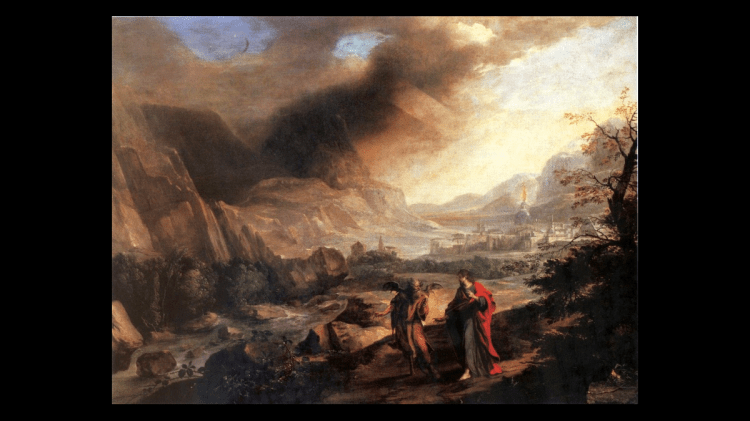

Temptation in the Desert according to Saint Luke
In the Catechism of the Catholic Church, the Lord’s Temptation in the Desert is summarized in the following way, “The Gospels speak of a time of solitude for Jesus in the desert immediately after his baptism by John. Driven by the Spirit into the desert, Jesus remains there for forty days without eating; he lives among wild beasts, and angels minister to him. At the end of this time Satan tempts him three times, seeking to compromise his filial attitude toward God. Jesus rebuffs these attacks, which recapitulate the temptations of Adam in Paradise and of Israel in the desert, and the devil leaves him “until an opportune time…” (CCC, nn. 538, 566).
Benedict XVI – General Audience 22 February 2012
According to Benedict XVI, in a General Audience Address on Ash Wednesday, the late Holy Father noted that in tempting Jesus that the Tempter (Gk. ὁ πειράζων) sought to draw Jesus from a messianism of self-sacrifice to a messianism of power: “In the New Testament, before beginning his public ministry, Jesus withdraws into the wilderness for 40 days, neither eating nor drinking (cf. Mt 4:2); his nourishment is the Word of God, which he uses as a weapon to triumph over the devil. Jesus’ temptations recall those that the Jewish people faced in the desert, but which they were unable to overcome…”
“In Jesus’ earthly pilgrimage we are surprised to discover this ambivalence, a time of special closeness to God — a time of first love — and a time of temptation — the temptation to return to paganism, but of course without any compromise with sin. After his Baptism of penance in the Jordan, when he takes upon himself the destiny of the Servant of God who renounces himself, lives for others and puts himself among sinners to take the sin of the world upon himself, Jesus goes into the wilderness and remains there for 40 days in profound union with the Father, thereby repeating Israel’s history, with all those cadences of 40 days or years…[I]n this period of ‘wilderness’ and of his special encounter with the Father, Jesus is exposed to danger and is assaulted by the temptation and seduction of the Evil One, who proposes a different messianic path to him, far from God’s plan because it passes through power, success and domination rather than the total gift of himself on the Cross. This is the alternative: a messianism of power, of success, or a messianism of love, of the gift of self” (General Audience 02-22-2012).
Overview of Luke 4
The focus for all three gospels (Mt 4:1-11; Lk 4:1-13; Mk 1:12-15) writers is that Jesus has undone the failures of both Israel and Adam; when we are incorporated into Jesus, we are incorporated into this victory, and we share in it by grace rather than by our own efforts. That does not mean, as we face temptations and challenges this Lent, we can avoid the challenge of discipline and effort. But we face these things knowing that Jesus conquered them, in the power of the Spirit, and that the same Spirit is God’s gift to us, and it is his presence that brings victory and enables us to be ‘more than conquerors’…
We can also see the way that the Lord’s resistance to these temptations contrasts with the failure of the Chosen People in their desert wanderings. Where the Israelites complained about the lack of bread (Ex 16.3) or, then, about the lack of variety in the provision of manna (Num 11.6), Jesus is content with the call to desert discipline. Where at the foot of Mount Sinai, the people succumbed to idolatry in making the golden calf (Ex 32), Jesus remains resolute in his focus on the worship of God alone. Where the people complained and tested God (Ex 17.2–3), Jesus resists the need to put God to the test; the word of experience and the word of Scripture are enough for Him. In this regard, Jesus ‘recapitulates’ the story of God’s people, and will faithfully complete his ‘exodus’ (Luke 9.31).
Excerpted from http://www.psephizo.com. Ian Paul. “The Testing of Jesus according to Luke 4.” 03 03 2025
 Nature and dignity