
Third Week in Ordinary Time
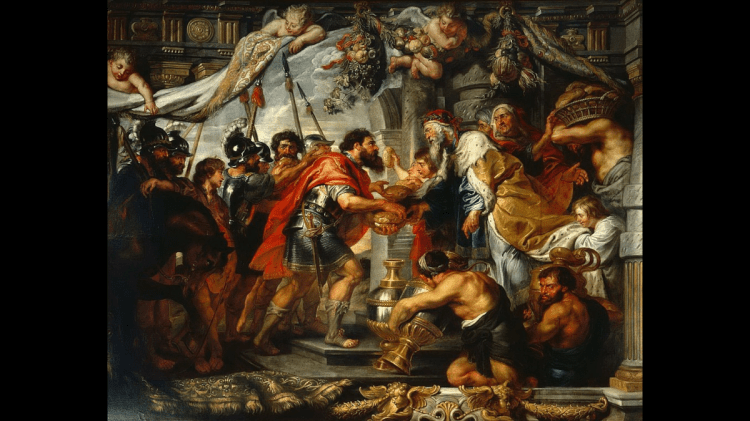

Melchizedek King of Righteousness
In all of Scripture, arguably the most mysterious figure of all is Melchizedek. He is first mentioned in the Book of Genesis. Then, almost a millennium later, his name is mentioned in the Book of Psalms (Ps 110:4) and, finally, the sacred author of the Letter to the Hebrews (Heb 7:1-10) deepens the understanding of the King of Salem. It is in the Letter to the Hebrews, though, where the mysterious and confounding facts about this ancient king and priest can be found.
In the Book of Genesis, this is said about him, “Melchizedek, king of Salem, brought out bread and wine. He was a priest of God Most High. He blessed Abram with these words: ‘Blessed be Abram by God Most High, the creator of heaven and earth; And blessed be God Most High, who delivered your foes into your hand.’ Then Abram gave [Melchizedek] a tenth of everything” (Gen 14:18-20). The only other Old Testament reference to this mysterious king is in the Book of Psalms, “The Lord has sworn and will not waver: ‘You are a priest forever in the manner of Melchizedek” (Ps 110:4).
The author of the Letter to the Hebrews used both those earlier passages to testify to the superiority of the priesthood of Christ above the priesthood of Aaron and the Levites, as prefigured in Melchizedek. This king suddenly emerged from the fog of salvation history in order to recognize Abraham’s great victory which was something that five local kings could not achieve. Then, the king of Salem prepared a feast for Abram – by bringing out bread and wine. These gifts or staples could be listed as stand-ins for the more comprehensive provisions needed for an exhausted army. Yet, bread and wine quite often accompanied animal sacrifice. So, given that Melchizedek is named as a priest, he may have come prepared to sacrifice to El Elyon or the God Most High. Abraham acknowledges the blessing by giving a tenth of the recaptured spoils from his victory as a tithe to Melchizedek.
There are a few options in regard to what the name Melchizedek could mean. In Hebrew, melekh means king and tzedek means righteous. However, either of those expressions could also be a name, so it could mean one of the following: melekh is just, tzedek is my king, or my melekh is tzedek. The author of the Letter to the Hebrews translates Melchizedek, though, as righteous king (Heb 7:2 NABRE) or King of righteousness (Heb 7:2 KJV).
As a figure who looked forward to Christ and whose priesthood prefigured Christ’s true priesthood, Melchizedek had a unique biblical role. The king of Salem illustrates that, however few in number, there were people after the judgment at the Tower of Babel who continued to worship the true God, even when Abram’s family became idolaters, up until God revealed himself to Abram (Josh 24:2). You cannot glean the content of the revelation Melchizedek had been given by God; however, regardless of what that was, the ancient king remained faithful to the knowledge he was given, and he recognized Abram as being squarely within the line of divine promise.
Excerpted from http://www.answersingenesis. Troy Lacey & Lita Sanders, “Who Was Melchizedek?” 17 January 2025
 Nature and dignity