Prophecy Relating Fulfillment: 1st Reading & the Gospel
Prior to today’s Gospel, Jesus had just called the Twelve to be His apostles and, then, the Lord engaged in His first exorcism. This casting out of a demon is recounted within the context of a conflict with His own family.
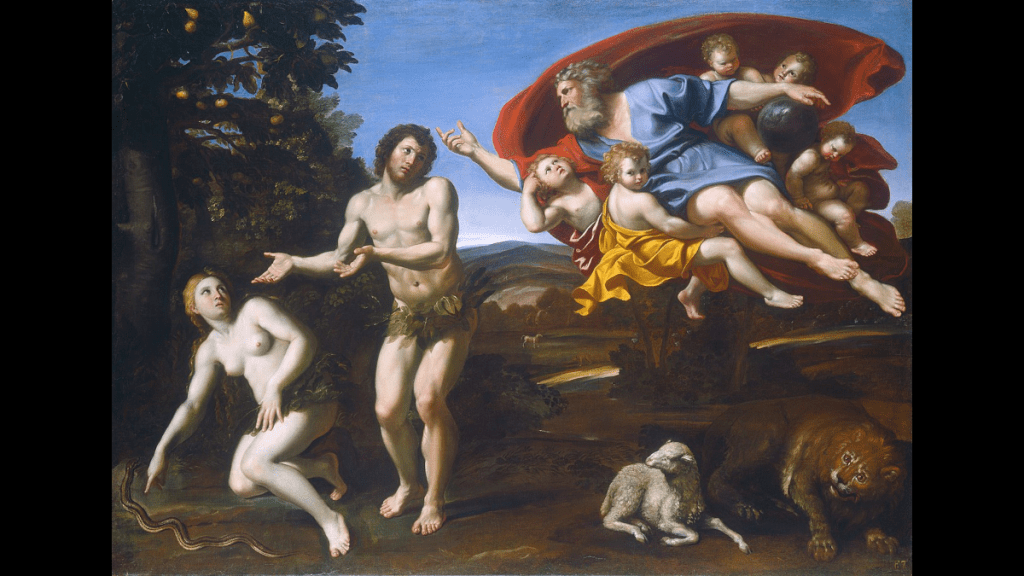
The proverbial saying that “Pride goes before disaster, and a haughty spirit before a fall” (Prov 16:18) is well-illustrated. Pride indeed induced Adam and Eve to disobey God. Not only did they wish to be independent of God, in fact, they hoped to be God’s equals. Even though they were the parents of all the living, they disobeyed God’s command and ate the very fruit they were commanded not to eat. Their pride and disobedience were not the problem but a symptom of a deeper issue, which is that they did not trust God. So, what you misdiagnose, you mistreat. Those two lived in a world of uncertainty and, so, had two questions that could not be easily answered: Why did God forbid them from eating one particular tree and, then, what is the death that would come from eating its fruit?
Adam and Eve were in the dark and that was the real issue. God purposely set things up that way because the Creator wanted them to trust Him. By introducing uncertainty into their world, the Creator was inviting them to a relationship of dependence on Him. If they had trusted God they would have lived a life freed from servile labor and even death. Indeed, they would have had truly abundant life. But they chose to distrust and reaped the consequences of their choice. Most people surmise that God rejected Adam and Eve in the Garden of Eden, but it is the other way around—they rejected God. By spurning God’s words of life they cut themselves off from the Source of life, and when you do that you die. In eating the forbidden fruit, Adam declared God to be an untrustworthy liar. Through their actions they were illustrating the pride that was their curse by saying, “God, we’re better off without you.”
Life is an invitation to respond to the overtures of a God who loves us and desires to share his life with us. There is far more to life than we can comprehend or manage. Try as we might we simply were not designed to cope with all that life throws at us. Rather, we were designed for a life of dependence on a good God who promises to supply all our needs according to His glorious riches in Christ Jesus (Phil 4:19). The secret to life is not “obey or die,” it is “trust God or else die trying” (see Jn 5:24, 11:25). The bottom line is not whether you obey God but whether you trust Him. It is impossible to trust God and not obey Him, but there are many people who think they are obeying God yet they do not trust Him.
In the Gospel, a crowd so large had gathered that Jesus and the disciples were not even able to eat their bread. His family comes to take him away because they think Jesus is beside Himself. And the scribes think that He is possessed by the devil. Jesus points out to them the absurdity of their even thinking that He would use the devil to cast out demons. In fact, it is Jesus who ties up the evil strong man, Beelzebub, and overcomes Satan. The Lord concludes with a brief saying about the forgiveness of sins. All sin can be forgiven except for blasphemy against the Holy Spirit. It is not known exactly what is meant by such a reference to an unforgivable sin. It could be that the only sin that cannot be forgiven is the one that cuts the sinner off from the source of forgiveness, the Holy Spirit. Saint Mark then brings Jesus’ family back into the forefront. They are not presented in a critical light, but are just trying to see Him. This gives Jesus the opportunity to point out that family for Him is not based on blood, but is comprised of those who do “the will of God.”
Partially excerpted from Paul Ellis. “The Root of Disobedience.” 21 March 2013. www.escapetoreality.org
 Nature and dignity