Christmas is December 25, right? Or maybe it’s an eight-day celebration — something called an “octave?” Also right! But aren’t there 12 days of Christmas? Yes, to that too. The answer to each of those questions is “yes.” When Catholics talk about Christmas, they mean more than one thing — actually they mean several overlapping things.
Since the middle of the second century BC the Roman consuls began their term of office on the first day of January. Around 46 BC, Julius Caesar introduced the Julian calendar and the first day of the new year became January 1 and not, as had been formerly true, March 1. Since the month of January was named after the two-faced god Janus, the god of doors and entryways who faces in two directions, the pagans celebrated that first day of January with acts of great debauchery. In early Church circles, the pagan decadence was counteracted by the Church encouraging penitential practices such as fasting. The oldest liturgical calendars contained references to Christmas, and within the Philocalian Calendar or the Chronograph of 354, you will find the oldest reference: VIII kal. Ian. natus Christus in Betleem Iudeae (Eng. Eighth day before the kalends of January [December 25] Birth of Christ in Bethlehem of Judea”).
Following the Nativity, the people during the Middle Ages saw the saints that comprise the intervening days of the Octave of Christmas as a sort of cortege of honor for the newborn King, calling them the Comites Christi or Companions of Christ. Those honored on these days, St. Stephen (December 26), St. John the Evangelist (December 27), and the Holy Innocents (December 28), help us to reflect not only on Who it is who has been born. Yet, those feasts—particularly the chants and readings of the Mass and Liturgy of the Hours—invite those who pray the Hours or who go to daily Mass to reflect on the fullness of the Paschal Mystery, recalling the Death and Resurrection of Christ and the experience of suffering endured by the first Christians.
These days also epitomize the types of martyrdom: A believer was known to be a red martyr due to either torture or violent death by religious persecution. The term “white martyrdom” used by Saint Jerome was meant “for those such as desert hermits who aspired to the condition of martyrdom through strict asceticism”. Green martyrdom consists in this, that by means of fasting and labor he frees himself from his evil desires, or suffers toil in penance and repentance.
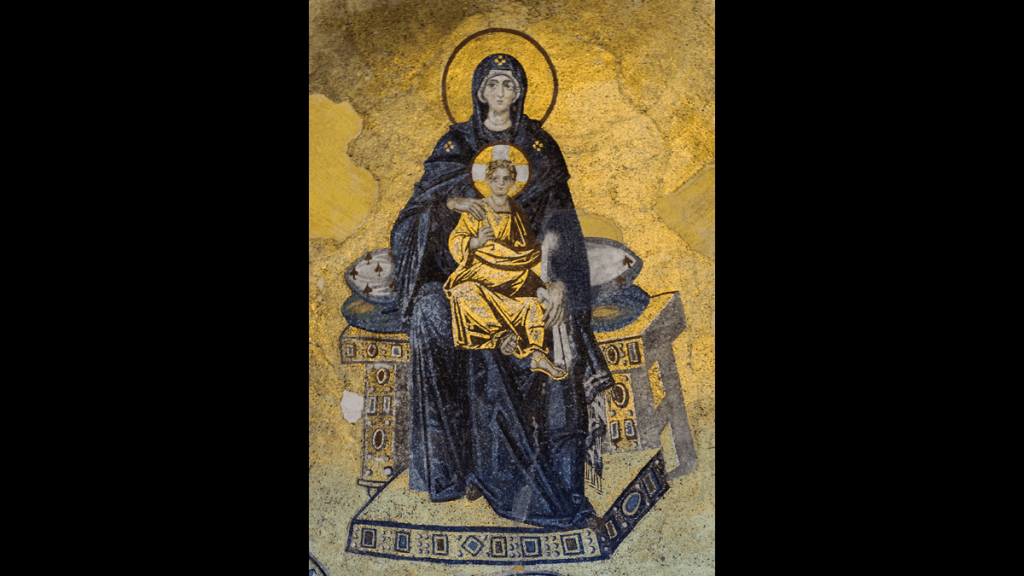
The eighth or octave day coincides with the first day of the civil year and acknowledges Mary as the Holy Mother of God: “January 1, the Octave Day of the Nativity of the Lord, is the Solemnity of Mary, the Holy Mother of God, and also the commemoration of the conferral of the Most Holy Name of Jesus” (UNLYC, n. 34f). The title Holy Mother of God is the expression used in the Catholic Church derived from the Greek word Theotokos, meaning God-bearer. Mary, chosen by God to be the Mother of the Savior and her willingness to do so is cause for this annual celebration of her divine Motherhood.
 Nature and dignity