
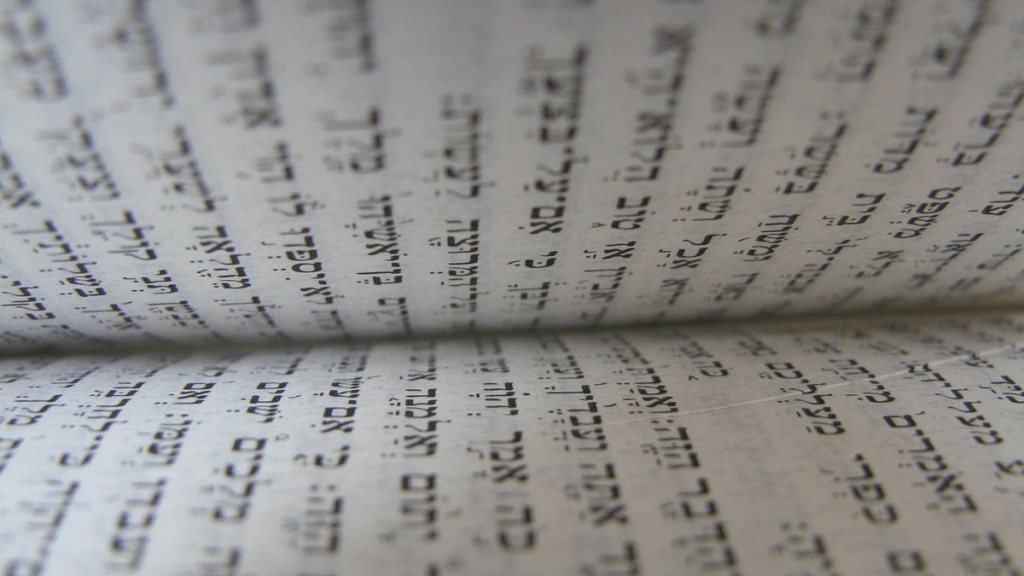
The Book of Wisdom is one of the deuterocanonical (or apocryphal) books of the Bible. It is one of the seven sapiential books of the Septuagint Old Testament, which includes Job, Psalms, Proverbs, Ecclesiastes, Song of Songs, and Sirach (or Ecclesiasticus). All four of the apostolic branches of Christianity — Assyrian Church of the East, Oriental Orthodoxy, Eastern Orthodoxy, and Roman Catholicism—count the Wisdom of Sirach among their Holy Scriptures.
The distinction between labeling this book as deuterocanonical or apocryphal reflects the development of which books of Sacred Scripture are considered canonical or not. The Septuagint or LXX, what you could identify as the Hebrew Bible in Greek, was used for over two-hundred years by Jews and by early Christians. After the fall of Jerusalem (70 AD), the Jews restored the Hebrew language to their Bible. These seven books, which were included in the Septuagint but not in the original Hebrew Bible, were then set apart and remained in Greek. When the Christians claimed that they had written new scriptures, Jews from a rabbinical school in Javneh or Jamnia met around year 80 AD and, among other things, discussed the Hebrew canon. Obviously, this did not include the dawning New Testament nor the seven Old Testament works and portions of Daniel and Esther, which are included in the Catholic version of the Bible. This still did not settle the Pharisee canon, since not all Jews agreed with or even knew about the decision at Javneh. Rabbis continued to debate it into the second and third centuries of the Christian era.
Later, when Saint Jerome translated the Canon of Scripture and produced the Latin Vulgate, he labelled those books as Apocrypha. The word apocryphos (ἀπόκρυφος) was first applied to writings which were to be read privately rather than in the public context of church worship. Later on, Martin Luther argued that the New Testament authors had never quoted from those seven books in question, so they were in a different class than the rest of the Bible. The Septuagint or the Greek translation of the Bible in Hebrew included the seven deuterocanonical books. For this reason, the Protestant historian J.N.D. Kelly wrote, “It should be observed that the Old Testament thus admitted as authoritative in the Church was somewhat bulkier and more comprehensive [than the Protestant Bible]. . . . It always included, though with varying degrees of recognition, the so-called apocrypha or deuterocanonical books.”
The authors of the New Testament quoted freely from the Septuagint—over 300 times. Up until the 19th century, even in Protestant versions of the Bibles, these seven books were usually relegated to a section that was identified as apocryphal. Though, in 1825, the Edinburgh Committee of the British Foreign Bible Society excised these seven books from authorized text. Until that time, they had been included at least in an appendix.
Saint Matthew & Wisdom Literature
Saint Matthew’s attention to the sapiential books, especially Sirach, stands out from the other Gospel writers. In the Sermon on the Mount and in Matthew 10 and 11, Jesus taught from Sirach repeatedly and then applied one of Sirach’s discourses on Wisdom to Himself. Matthew 11:28-30 captured our Lord’s cherished words on Sirach (Sir 51:23, 26) as follows: “Come to Me, all you who labor and are burdened, and I will give you rest. Take my yoke upon you and learn from me, for I am meek and humble of heart; and you will find rest for yourselves. For my yoke is easy and my burden light.” In this familiar passage, Jesus takes Sirach’s doctrine on God’s Wisdom and shows that it applies to Himself.
While some will find it foreign to hear of Wisdom (personified as a woman) as speaking of Jesus, Paul twice called Jesus “the Wisdom of God.” Likewise, early Christians including Athanasius were not shy about listing Scriptures on Wisdom as references to Jesus. The great danger of noting that Jesus is God’s Wisdom is to take references to the creation of Wisdom in the heretical fashion of Arius as though the Scriptures state that God’s Son was created.
The Gospel of Matthew also contains allusions to the Book of Wisdom. Parallels between this book and the Gospel of Matthew include the theme of testing, and the mocking of a servant of God’s claim to be protected by God. Matthew’s gospel teaches that Jesus is the suffering servant of God. (Compare Wis. 2:17-18 with Mt. 27:43).
Excerpted from — Matthew Bryan. “Wisdom of Syrach in Matthew’s Gospel.” Concilar Post: Meaningful Dialogue across Christian Traditions. 22 February 2019. & http://www.newworldencyclopedia.org, s.v. Book of Wisdom.
 Nature and dignity