The biblical text of the prophet Jonah is only four chapters long—and Jonah’s prophesying is limited to one short sentence — “Forty days more and Nineveh shall be overthrown” (Jnh 3,4). And yet, around this small sacred text, as if it were around Jonah’s own troubled ship, high waves of controversy and mystery have swirled for centuries. The brief Book of Jonah has made an extraordinary impact on the history of Jewish, Catholic, and even Islamic spirituality. Jonah himself is a prophet of that only one prophecy—Nineveh’s impending destruction. But his story has attracted the attention of exegetes and theologians in every generation.
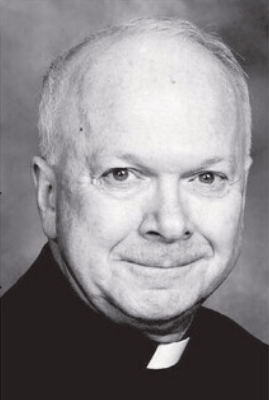
Paul Murray, a Dominican priest and professor from Northern Ireland, writes on complicated subjects with brevity. Among another one of his books is a poignant reflection on Mother Teresa’s mysticism, I Loved Jesus in the Night. As Father Murray outlines, the Book of Jonah emerges as perhaps the most profoundly Christian of all the books in the Hebrew Bible. Even more so, it is a book that speaks with the most telling resonance for the modern age. While Jonah’s message is serious and compelling, even more surprising than that is its humor that forms part of the book’s core revelation.
Originally published in Ireland in 2002, A Journey with Jonah: The Spirituality of Bewilderment has been republished. Its three chapters, and three “lessons” relate to a storm, a whale, and a plant, familiar to anyone who has read the Book of Jonah. A brief summary of the book’s content is this: (1) Told by God to go to Nineveh, Jonah — who’s bigoted and thinks badly of the Ninevites — flees in the opposite direction on a boat. (2) He goes down into the hull of the boat and falls asleep. A frightening storm arises and the vessel’s crew members become upset, throwing Jonah overboard where he is quickly swallowed up by a whale. Three days later, the whale spits him up and Jonah sits in self-pity under a large plant, which is then attacked by a worm and dies. (3) Finally, Jonah does as he was told and goes to Nineveh to preach.
In Chapter 3 of Father Murray’s work, entitled “Compassion without Limit: The Lesson of the Wondrous Plant,” you would find this: “Reading through the book of Jonah, we soon come to realize that God speaks to us not only through his word but also through our own confused emotions. Jonah’s relationship with God, at least to some significant degree, consists of a series of different states of feeling, all of which have been provoked by different circumstances: emotions of guilt, fear, joy, etc.” With the aid of Carmelite spirituality, including the teachings of Saint Teresa of Avila and St. John of the Cross, Murray then explains that being close to God does not always mean feeling spiritual or happy. He calls this a “Jonah truth,” that God speaks to us sometimes when we are not feeling “on some exalted spiritual sphere” but rather, in the midst of our emotional and passionate ordinary troubles. Through a kind of “grace and mystery of bewilderment” like Jonah’s, Murray says, we can begin to recognize God in places where we wouldn’t have recognized God before.
The book then concludes with a short, lectio divina on Jonah from then-Joseph Cardinal Ratzinger — written when the late Holy Father was a cardinal in the Church and published in English in that book for the first time. In 2003, the lectio was originally given in the Church of Santa Maria in Traspontina in Rome. Father Murray dwells on contemporary themes and how the trials of Jonah, the reluctant prophet, might offer hope to those who are, sadly, miserable today: for example, the inclination for people today to identify as spiritual-and-not-religious (which might also be described as the contemporary phenomenon of multiple religions with a membership of one). Dissatisfied with pure materialism and in search of a spiritual life, people look first to their own spirits in an inwardly directed search. It is from the vantage point of our spirits that we can see, so to speak, the Holy Spirit, but so many people conflate the window with the view and identify themselves as the god who sets the parameters for their spiritual lives. They thereby close in on themselves and exclude the very thing they yearn for, the living God.
(Retrieved from thewayofbeauty.org)
 Nature and dignity